
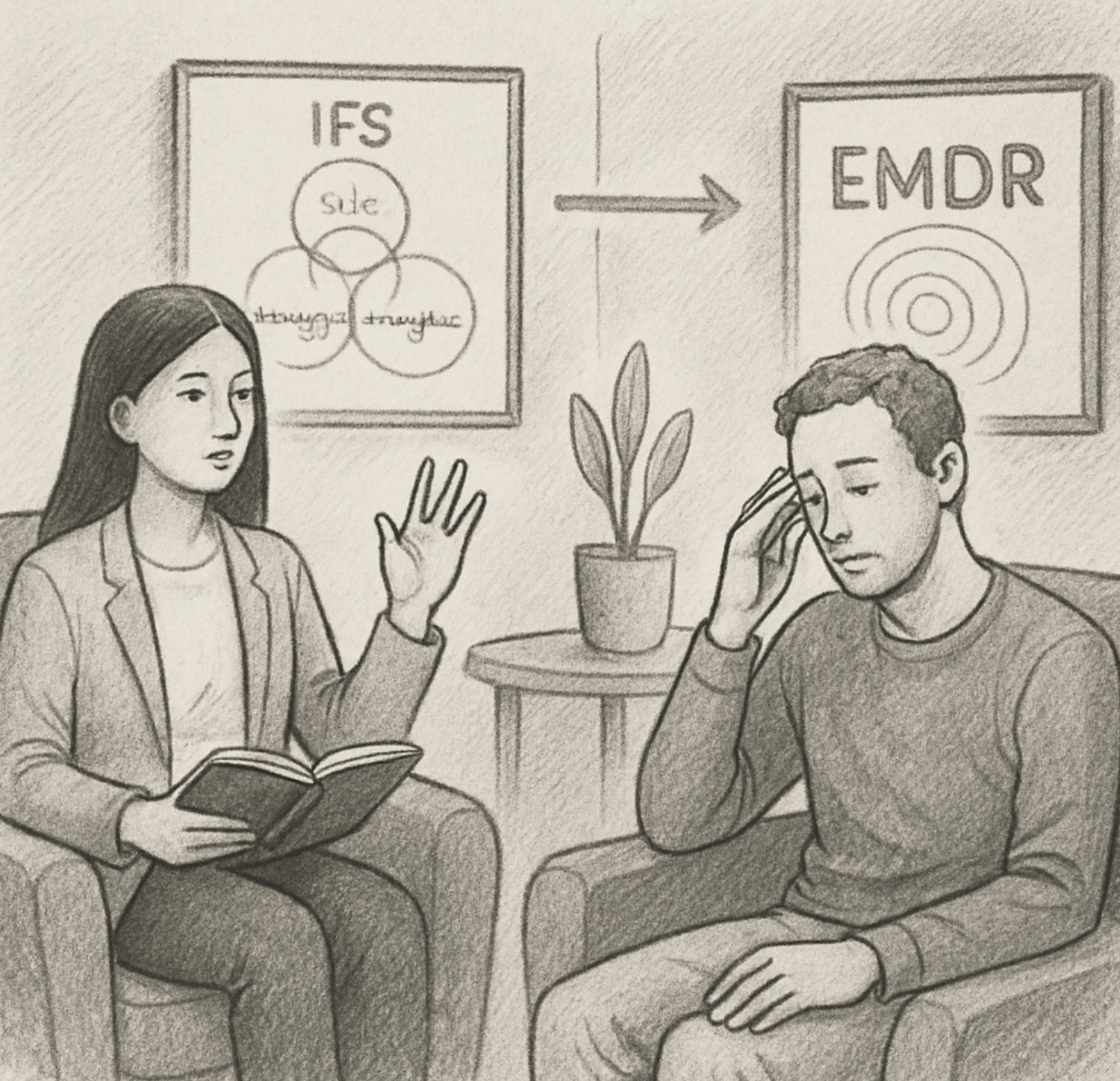
Combining Internal Family Systems (IFS) and Eye Movement Desensitization and Reprocessing (EMDR) offers a powerful therapeutic approach. Both therapies are evidence-based and effective for treating trauma.
IFS focuses on understanding and healing the different parts of the self. These parts are often referred to as sub-personalities.
EMDR, on the other hand, uses structured techniques to process traumatic memories. It involves bilateral stimulation, like eye movements, to reduce the emotional impact of trauma.
When combined, IFS and EMDR address both emotional and cognitive aspects of trauma. This integration can lead to deeper healing and emotional regulation.
Therapists trained in both methods can tailor sessions to meet individual needs. This enhances the therapeutic process and outcomes.
Understanding IFS and EMDR: Foundations of Healing
To grasp the effectiveness of combining IFS and EMDR, it's crucial to understand each therapy. IFS and EMDR, though distinct, complement each other beautifully in healing trauma.
IFS focuses on the mind's complexity. We each have sub-personalities or "parts," like a manager or an exile. Recognizing and healing these parts is key to resolving internal conflicts.
EMDR operates differently. It addresses traumatic memories by encouraging the brain to reprocess them. This therapy reduces their emotional weight through eye movements or other bilateral stimulation.
Together, these therapies offer a holistic approach. They emphasize self-awareness and desensitization.
Key features of each therapy include:
- IFS: Heals internal conflicts by exploring sub-personalities.
- EMDR: Desensitizes traumatic memories using bilateral stimulation.
This combination provides a comprehensive therapy session addressing mind and memory.
Therapists can use both methods to create a balanced and safe healing environment.
Why Combine IFS and EMDR? Key Benefits and Synergy
Combining IFS and EMDR amplifies the benefits of trauma therapy. Each method targets different healing aspects, fostering a more comprehensive recovery approach. This combination addresses both emotional processing and cognitive understanding, leading to holistic healing.
When integrated, IFS helps uncover and address internal conflicts. It allows clients to identify the parts of themselves impacted by trauma. Meanwhile, EMDR facilitates the desensitization of disturbing memories. This aids clients in processing emotions with less distress, making the combination uniquely effective.
Clients often report transformative experiences with this blended approach. Therapy becomes more engaging and insightful. Some key benefits of combining IFS and EMDR include:
- A deeper understanding of personal experiences.
- Enhanced emotional regulation.
- Greater empowerment and self-awareness.
The synergy between IFS and EMDR promotes profound healing. It’s particularly helpful for those who haven’t found success with other therapies. As clients engage actively in their healing, they experience significant and lasting change.
How IFS Enhances the EMDR Process
Integrating IFS into the EMDR framework provides a unique therapeutic advantage. IFS prepares clients for EMDR by fostering a safe internal environment. It encourages clients to explore their inner world compassionately, identifying parts that hold trauma.
Before EMDR sessions, IFS helps clients develop trust with their internal parts. This trust is crucial for effective EMDR processing. With an understanding of these parts, clients can better navigate traumatic memories during EMDR, reducing potential overwhelm.
IFS not only prepares clients but also enriches EMDR outcomes. By focusing on internal dynamics, IFS supports resolving deep-rooted emotional conflicts. This leads to:
- Improved emotional resilience.
- Greater insight into personal struggles.
- Enhanced ability to manage distressing memories.
The preparatory work of IFS makes EMDR sessions more effective. Clients experience a smoother therapeutic journey, with reduced risk of emotional flooding. This combination provides a powerful toolset, enabling a well-rounded approach to healing.
The Therapeutic Process: What to Expect in IFS EMDR Therapy
Engaging in IFS EMDR therapy begins with establishing a supportive therapeutic relationship. This creates a secure space for healing. Initially, therapists help clients recognize their internal parts, fostering understanding and compassion.
As therapy progresses, clients begin active EMDR sessions. Here, bilateral stimulation is used to process traumatic memories. This technique helps reduce the emotional intensity of these memories.
Throughout this journey, clients might encounter various internal parts seeking attention. Therapists guide them to negotiate with these parts safely. The aim is to ensure each session is tailored to individual needs.
Clients typically experience:
- Enhanced emotional insights.
- Smoother processing of trauma.
- Increased self-awareness and acceptance.
by Frederick Medina (https://unsplash.com/@frederickjmedina)
The therapeutic process is dynamic, adapting to each client's pace. This flexibility ensures a holistic approach to healing. Many find this integrated method not only effective but deeply transformative, addressing both trauma and self-perception.
Who Can Benefit from Combining IFS and EMDR?
Individuals facing complex trauma often find relief through IFS EMDR therapy. Those who haven't thrived with traditional methods may also benefit. This approach provides a unique path to healing.
The combined therapies can significantly benefit people experiencing:
- PTSD or acute stress.
- Depression and anxiety linked to trauma.
- Challenges in emotional regulation.
The safe environment cultivated during therapy supports diverse emotional needs. Clients learn to process difficult memories and enhance self-understanding.
Moreover, this integration is ideal for those seeking a deeper understanding of their inner world. It offers tools for lasting resilience and self-discovery. By addressing the root causes of trauma, clients can break re-traumatization cycles, leading to more complete healing.
Real-Life Examples: Healing Through Integration
Consider Sarah, who struggled for years with anxiety and flashbacks from childhood. Traditional therapy yielded little progress. However, when she began combining IFS and EMDR, profound shifts occurred. Sarah learned to identify and nurture the frightened child part of herself, reducing her anxiety.
Another example is Mark, burdened by emotional triggers from past relationships. With IFS EMDR therapy, Mark processed his triggering memories. He discovered how unresolved pain impacted his adult interactions. This insight enabled him to develop healthier relationship patterns.
Finally, we look at Lisa, who battled recurring depression. Through IFS, she uncovered critical inner parts driving her feelings. In EMDR sessions, Lisa processed the emotions tied to these parts. This integration enhanced her self-awareness and emotional resilience, leading to a brighter outlook.
by Sweet Life (https://unsplash.com/@sweetlifediabetes)
Finding a Therapist Trained in Both IFS and EMDR
Locating a therapist who offers both IFS and EMDR requires some research. Start by checking professional mental health directories online. These platforms often have filters for specialized therapies.
When choosing a therapist, consider the following:
- Verify their credentials and training
- Check client reviews or testimonials
- Confirm their experience with integrating IFS and EMDR
Connecting with the right therapist can make a significant difference in your healing journey.
Embracing Integrated Healing
Combining IFS and EMDR offers a powerful, comprehensive approach to trauma healing. This integration supports emotional balance and cognitive clarity. By embracing this therapy blend, clients can achieve deeper understanding and lasting peace. Consider this path to foster self-compassion and transformative, enduring recovery.
Take the Next Step
As a trauma-informed, therapist at Thomas Blake Therapy, Los Angeles, CA I understand the link between identity and trauma. I provide care to reclaim safety, authenticity, and wholeness.
Contact us today to schedule a free 15 minute consultation. Healing is possible. With support, you can move from surviving to thriving.