
Somatic Integration
Therapy
Beyond Talk: An Integrative Approach to Deep Restoration
“I’ve always lived very much in my head. I could intellectualize anything. But there was this chronic tightness, this holding — it was like something was stored somewhere my thoughts couldn’t reach. I needed an approach that started from the body up, not the mind down.”

What Is Somatic Integration?
Somatic Integration Resonance Therapy is a non-traditional form of somatic therapy focused purely on nervous system regulation through neural pathway regeneration. Many traditional healing methods work “top-down,” focusing on thoughts and narratives.
Somatic Integration offers a bottom-up approach, guiding you into a deeply therapeutic, meditative state where true somatic (body-based) and nervous system healing can take root. Somatic Integration combines principles used in EMDR, energy healing, guided meditation, and binaural music to recalibrate the nervous system.
Who Can Benefit from Somatic Integration?
Individuals seeking a powerful, non-traditional complement to talk therapy
People who feel “stuck” in patterns of anxiety, stress, or fight/flight/freeze responses
Those who have found traditional therapy difficult or frustrating
People drawn to somatic or body-centered, meditative practices but wanting a more guided, integrative experience

How Somatic Integration Works
This integrative session is a carefully crafted meditative process that utilizes sensory and auditory input to facilitate deep-seated, restorative change within your mind and body.
By regulating and influencing the amygdala’s response to stimuli, this modality helps you process stress, trauma, and emotional burdens without the need for reliving triggers. The process involves a combination of techniques such as guided imagery, breathwork, and sound therapy, which work together to create a safe space for healing.
Participants often report a profound sense of relaxation and clarity, as the process encourages the release of pent-up emotions and fosters a renewed sense of balance and well-being.
What Somatic Integration Looks Like in Session
Bilateral Stimulation
Gentle, rhythmic, alternating sensory input engages both hemispheres of the brain — similar to EMDR — promoting the brain’s natural ability to process difficult memories and regulate emotional distress.
Energy Healing
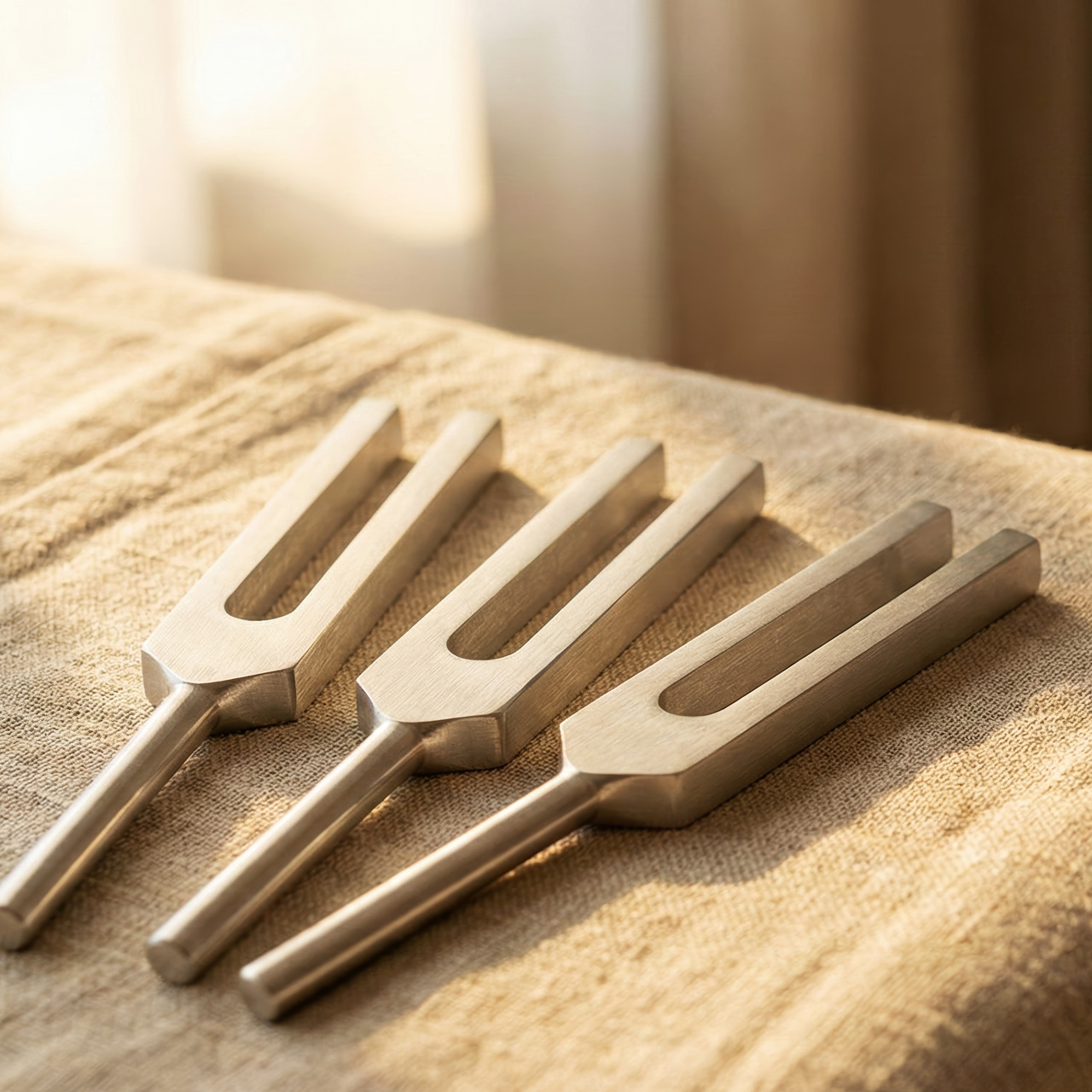
Resonant sound conducted through sound bowls and focused vibration from tuning forks help quiet the nervous system and soften physical tension. Many people find the frequencies create a felt sense of release in the body — a settling that supports deep relaxation alongside the rest of the work.
Binaural Music
Carefully selected binaural music promotes specific beneficial brainwave states (Alpha or Theta), associated with deep meditation, relaxation, and enhanced creativity.
The Result
Over time, this work can bring a real reduction in chronic stress and anxiety, a greater sense of inner calm and grounding, and improved emotional regulation and resilience. You may also notice a deeper connection to your body's innate wisdom and self-healing capacity, along wiht a powerful release of old emotional energy and tension.
Questions
Find answers to common questions about Somatic Integration and how it works.
Somatic therapy works with the body, not just the mind. Rather than focusing on thoughts or narratives, somatic approaches address how trauma and stress are held in the nervous system and the body itself.
Both use bilateral stimulation, but somatic integration is a broader, more meditative modality that incorporates sound, resonance, and binaural audio. EMDR is a specific reprocessing protocol. I use both and often integrate them.
No. One of the advantages of somatic integration is that it can process stored experience without requiring verbal narration. The work happens at the body and nervous system level.
This varies depending on what you’re working through. Some clients experience significant shifts in one to three sessions; ongoing work tends to deepen the integration over time and can be most beneficial when done consistently, on a weekly basis.
Some elements translate well to video; others work better in person. We’ll discuss what makes sense for your situation.
Take the next step
Book a consultation and take the first step toward reclaiming your life.