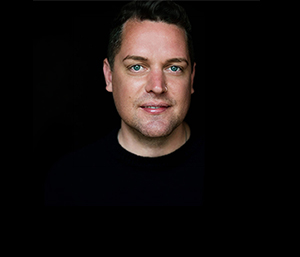

By Thomas Blake, LMFT | Thomas Blake Therapy, Pasadena, CA and telehealth
A client sits across from me, eyes closed, and for the first time in months their shoulders drop. They describe a warmth spreading through their chest. Then, almost immediately, a flicker of worry crosses their face. "How do I keep this?" they ask. "It always disappears."
I hear some version of that question often. Sometimes it comes after a breakthrough in EMDR. Sometimes it comes after a client meets a younger part of themselves with real compassion in IFS. And very often it comes after a psychedelic experience, when someone has touched awe, love, or a sense of connection so large it is hard to put into words, and then watches it fade in the days that follow.
Most people think of trauma therapy as a process of subtraction: removing the charge from painful memories, quieting the alarm system, clearing out what hurts. That work matters, and it is a large part of what I do. But the same tools that help us process pain can also help us deepen, anchor, and expand what is good. This is the part of healing that often gets left out of the conversation, and it is where post-traumatic growth lives.
What Is Post-Traumatic Growth?
Post-traumatic growth is positive psychological change that develops as a result of struggling with a highly challenging life event. Psychologists Richard Tedeschi and Lawrence Calhoun introduced the term in the 1990s after noticing that many trauma survivors described their lives as changed for the better in specific ways, not in spite of what happened but through the process of working with it.
Their research identified five areas where this growth tends to show up:
- Relating to others: deeper, more honest relationships and greater compassion for other people's suffering.
- New possibilities: new interests, directions, or paths that were not visible before.
- Personal strength: a sense of "I survived that, so I can handle more than I thought."
- Spiritual or existential change: a shift in how one understands meaning, purpose, or one's place in the world.
- Appreciation of life: a changed sense of what matters and more gratitude for ordinary moments.
Post-traumatic growth does not mean the trauma was good, and it does not erase pain. People can grow and grieve at the same time. It also does not happen automatically. Growth tends to take root when we have support, time, and a way to work with experience rather than only endure it. That is where therapy can help.
Why the Brain Needs Help Holding Onto the Good
If positive experiences are so valuable, why do they slip away so easily? Part of the answer is the negativity bias. Our nervous systems evolved to notice and remember threats quickly, because missing a threat was more costly than missing a pleasant moment. Psychologist Rick Hanson describes the brain as being like Velcro for negative experiences and Teflon for positive ones.
For people with a trauma history, this bias is often stronger. A nervous system shaped by danger stays on watch. Good feelings can register as unfamiliar, fleeting, or even unsafe. Some clients tell me that feeling happy makes them brace for the other shoe to drop.
Hanson's research on positive neuroplasticity suggests that we can change this by staying with positive experiences long enough, and with enough attention, for them to be encoded more deeply. A pleasant moment that lasts a few seconds tends to pass through. The same moment held for 20 or 30 seconds, felt in the body and given full attention, has a better chance of becoming a lasting resource. EMDR, IFS, and somatic therapy each offer structured ways to do exactly that.
EMDR: Installing the Positive, Not Only Processing the Negative
EMDR (Eye Movement Desensitization and Reprocessing) is best known for helping people reprocess traumatic memories. But installation of positive states is built into the method itself. If you're new to EMDR, here's what EMDR actually feels like from the client's chair.
Resource Development and Installation (RDI)
Resource Development and Installation, developed by Deborah Korn and Andrew Leeds, uses short sets of bilateral stimulation (eye movements, tapping, or tones) to strengthen internal resources. A client might recall a time they felt capable, a person who made them feel safe, or an image of a calm place. We help them build that memory in detail (what they see, hear, and feel in their body), and then use brief bilateral sets to strengthen and deepen it.
RDI is often used to build stability before trauma processing. In my experience it is just as useful for strengthening positive experiences on their own.
The Installation Phase
In standard EMDR, after a disturbing memory has been reprocessed, we move into the installation phase. Here, the client links the memory to a positive belief about themselves, such as "I am safe now" or "I did the best I could." We check how true that belief feels on a scale of 1 to 7 and use bilateral stimulation to strengthen it until it feels as true as possible. The goal is not only that the memory hurts less but that something new and accurate takes its place.
The Future Template
EMDR also uses a future template, in which clients imagine handling a future situation with the strengths they have built. This is a natural place to rehearse growth: imagining yourself speaking up, setting a boundary, or meeting a challenge from a steadier place, and letting the body learn what that feels like before it happens.
IFS: What Fills the Space After Unburdening
Internal Family Systems (IFS), developed by Richard Schwartz, understands the mind as made up of parts, each with its own feelings, beliefs, and roles. Some parts carry burdens such as shame, fear, or pain from past experiences. At the center is the Self, a core presence marked by qualities IFS calls the 8 Cs: calm, curiosity, compassion, confidence, courage, clarity, creativity, and connectedness.
Inviting Qualities In
One of the most moving moments in IFS comes after a part releases a burden it has carried for years. In the unburdening process, once the old feeling or belief is let go, the part is invited to take in whatever qualities it needs now. A part that carried terror might take in safety. A part that carried shame might take in playfulness or worth. This step is installation in IFS language: we do not leave an empty space. We help something new grow there.
Strengthening Self-Energy
Growth in IFS also means spending more time in Self. When clients notice moments of calm or compassion, we slow those moments down, help them feel where Self-energy lives in the body, and practice returning to it. Over time Self becomes less of a place we occasionally visit and more of a place we live from.
Parts That Are Afraid of Feeling Good
Sometimes, as soon as a client begins to feel joy or ease, a protective part steps in. It might bring up worry, criticism, or numbness. IFS treats these parts with curiosity rather than as obstacles. Often they have learned that feeling good leads to being blindsided or disappointed. When we understand what they are protecting against and earn their trust, they can let positive experiences stay longer.
Somatic Therapy: Feeling the Good in the Body
Somatic approaches start from the understanding that trauma is held in the body, and so is safety. If a positive experience stays only in the mind as a thought or an insight, it tends to be fragile. When it is felt as a physical sensation (a softening in the belly, an easier breath, warmth in the chest), it becomes more available to return to.
Glimmers
Deb Dana, whose work applies polyvagal theory to therapy, uses the word glimmers for small moments that cue the nervous system toward safety and connection: sunlight on a wall, a dog's greeting, a friend's laugh. Glimmers are the opposite of triggers. In somatic work, we practice noticing glimmers, naming them, and letting the body register them fully.
Pendulation
Pendulation, a concept from Peter Levine's Somatic Experiencing, describes the natural movement between activation and settling. Rather than staying inside distress, we help clients move gently between a difficult sensation and a resourced one. Each time the body returns to a place of ease, it learns that ease is possible and reachable.
Slowing Down
Much of somatic installation is simply slowing down. When something good arises in session, I might ask: Where do you feel that? What happens if you stay with it a little longer? What does your body want to do with it? These questions turn a passing moment into an experience the nervous system can learn from.
Psychedelic Integration: Anchoring the Profound
This is where much of my thinking on amplifying the positive began. In psychedelic integration work, clients often return from a medicine experience with something remarkable: a sense of unconditional love, deep peace, connection to something larger than themselves, or a felt understanding that they are worthy. These experiences can be life-changing. They can also fade quickly once ordinary life resumes, leaving people frustrated or wondering if it was real.
Integration is the work of bringing what was experienced into daily life so that it becomes lasting change rather than a fading memory. I use the same tools described above to do this:
- EMDR resource installation to revisit and strengthen key moments from the experience, such as the image, the sensation, or the insight, so that they become accessible resources.
- IFS to understand which parts were present during the journey, what they showed or released, and how to keep a relationship with the Self-energy many people encounter in these states.
- Somatic work to locate where the euphoria, expansion, or peace lived in the body and practice returning there.
I hold that psychedelic medicines need a trained clinical container. The medicine experience can open a door, but preparation and integration are what help people walk through it safely and make lasting use of what they find. Amplifying the positive is a core part of that integration.
When Positive Work Isn't the Right First Step
Installing the positive is not a way to bypass pain. Trying to force gratitude or growth before someone is ready can feel invalidating and can push grief underground. Good trauma therapy pays attention to timing.
For some clients, the first task is stabilization: building enough safety and support to work with difficult material at all. For others, strengthening resources is what makes trauma processing possible. And for many, growth emerges naturally once the weight of old pain has lifted. A skilled therapist follows the client's nervous system and moves between processing and resourcing as needed. Grief and growth are not opposites. Often they arrive together.
Frequently Asked Questions
Can EMDR be used for positive experiences?
Yes. EMDR includes structured ways to strengthen positive experiences, including Resource Development and Installation (RDI), the installation phase of the standard protocol, and the future template. Short sets of bilateral stimulation can help deepen positive memories, beliefs, and body states so they become more lasting resources.
What is resource installation in EMDR?
Resource installation is an EMDR technique in which a therapist helps a client recall or imagine a positive resource, such as a safe place, a supportive person, or a time they felt strong, and then uses brief bilateral stimulation to strengthen it. It is often used to build stability before trauma processing and to support growth afterward.
How long does it take to integrate a psychedelic experience?
There is no single timeline. Some people integrate key insights over a few weeks of focused work, while others continue to find meaning in an experience for months or years. Integration therapy provides structure and support so that the experience is translated into lasting change.
Is post-traumatic growth the same as resilience?
Not quite. Resilience usually refers to the ability to return to one's baseline after adversity. Post-traumatic growth describes moving beyond the previous baseline, such as developing deeper relationships, new priorities, or a changed sense of meaning, as a result of working through a difficult experience.
Do I need to have trauma to benefit from this kind of work?
No. Anyone can benefit from learning to take in and strengthen positive experiences. These approaches are helpful for people working through trauma, integrating psychedelic experiences, or simply wanting to feel more grounded, connected, and alive.
Post-Traumatic Growth Therapy in Pasadena and Online
Healing is not only about what we let go of. It is also about what we let in. If you are ready to work through painful experiences, or want help anchoring something meaningful from a psychedelic experience so it lasts, I would be glad to talk with you.
About Thomas Blake Therapy
Thomas Blake, LMFT, is a trauma-informed therapist specializing in EMDR, Internal Family Systems (IFS), somatic therapy, complex and developmental trauma, LGBTQ+ affirming care, and psychedelic integration. He sees clients in person at his Pasadena office at 210 S Orange Grove Blvd, Pasadena, CA 91105, and via telehealth across California, New Jersey, Maryland, Wyoming, and Idaho. Schedule a free 15-minute consultation.
Photo by Ilker Simsekcan on Unsplash